
Physicians face the challenge of tobacco use every day, and so do pharmacists. Many health care professionals don't believe they are doing their job if they turn the other way when facing smokers compromising their health. Others are reluctant to intervene unless smoking puts a patient at increased risk in the context of a needed intervention or interferes in some other way. Were a patient to admit to a type of addiction other than cigarette smoking, surely any health care professional would advise against use. Were a patient to decide to take up in-line skating with the kids, he or she would tell the patient to wear padding: "Don't forget the gloves. You should see the hand injuries in the Emergency Room." How could a health professional offer advice for one behavior—one that risks a scraped knee, elbow, or wrist—yet ignore another that threatens heart and lungs?
Research shows that a key factor in an individual's decision to stop smoking is a clinician's cessation advice. The most successful interventions, according to Treating Tobacco Use and Dependence, the U.S. Public Health Service–sponsored clinical practice guideline, are coordinated ones. The best involve multiple professionals within diverse areas of the health care community, even insurers and administrators. In a meta- analysis, researchers learned that having two or three different types of clinicians recommend cessation more than doubled the chances of successfully quitting. Clinician types included physicians and other clinicians such as nurses, dentists, dental hygienists, psychologists, pharmacists, and health educators (Table 1). In fact, the independent panel members who helped write the clinical practice guideline for treating tobacco dependence concluded that a failure to treat tobacco use constituted an inappropriate standard of care. These panel members included experts from around the country, including some who work in the Texas Medical Center in Houston.
|
||||||||||||||||
Health care professionals, because of the respect they command, can provide powerful motivation and assistance in quitting. Also, because of their frequent encounters with tobacco users, they are particularly well equipped to ask about smoking, advise about quitting, assess readiness to quit, assist the patient in quitting, and arrange follow- up care. The following advice in this module is based in part on the U.S. Public Health Service clinical practice guideline for treating tobacco use and dependence. This module and the other three that follow will offer strategies for identifying patients' readiness to quit, determining the most appropriate approach and cessation aids to ensure success, and obtaining support for combating tobacco use.
In the first module, we examine the scope of tobacco use, its causes, nicotine's pharmacokinetics and pharmacodynamics, and how nicotine traps tobacco users in a cycle of dependence.
Data from the 2001 National Health Interview Survey (NHIS), indicate that 46.2 million American adults currently smoke cigarettes. Of the 23% of adults who smoke— 21% of women and 25% of men—81.8% smoke every day, and about 18% smoke some days. The 2001 NHIS also estimated that 44.7 million adults were former smokers. A former smoker was defined as a person who reported smoking >100 cigarettes in his/her lifetime yet who currently did not smoke. It is estimated by the Centers for Disease Control (CDC) that 70 of every 100 smokers want to quit, but fewer than 3 in 100 stop successfully each year. Of course, the aim of this module and ones that follow is to increase the number of those smokers who successfully quit.
Across ethnic and racial groups, smoking is most prevalent among Native Americans and Alaskan Natives, of whom 33% smoke. Black (22%) and white non- Hispanic (24%) Americans smoke in about equal numbers. Smoking the least are Hispanics (17%) and Asians (12%) (MMWR 2003;52[40];953–956).
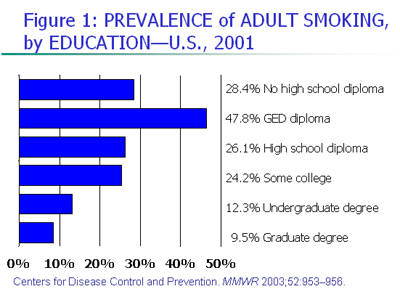
In general, the more education adults have, the less likely they are to smoke (Fig. 1). Among those with graduate degrees, for example, only 10% smoke, but those at the other end of the spectrum—for example, those who dropped out and earned a General Education Development (GED) diploma—exhibit the highest prevalence of smoking (47%).
|
In Texas, the percentage of the population that smokes (23%) is similar to that in the country as a whole. Other states fall above and below this prevalence. For example, in Kentucky, a tobacco-producing state where the tax on cigarettes is low, 31% of residents smoke, whereas in Utah, where a predominant religious group opposes smoking, the rate is 13%.
Outpacing national statistics in 1999, however, were those for cigarette smoking and any tobacco use by Texas teens (Table 2). In that year, Texas teens were more frequently cigarette smokers than were the nation's teens as a whole (12.6% vs. 9.2% in middle school and 32.8% vs. 28.4% in high school) and more likely to be users of any tobacco than were the nation's teens overall (22.9% vs. 12.8% in middle school and 42.1% vs. 34.8% in high school).
|
||||||||||||||||||||
Texas teens also outpaced their national counterparts in smokeless tobacco use and cigar smoking (data not shown). New trends in Texas, however, indicate a decline in tobacco use among teens.
Data from the most recent Texas Youth Tobacco Survey show a statistically significant decline in lifetime (ever) cigarette and cigar smoking in both middle and high school teens between 1999 and 2001 and in current use of any tobacco products and current use of cigarettes for the same years (Table 3).
|
||||||||||||||||||||||||||||||||||||||||||||||||||||||||
Parsing the data by race and ethnicity also indicated trends downward for both middle school and high school across major groups. Statistically significant declines occurred in middle school among African-American teens in measures of current use of any tobacco and in current cigarette smoking. In fact, current use of any tobacco levels declined significantly for white, African-American, and Hispanic middle school teens. Although trends for current cigarette smoking and current use of any tobacco were downward for these three groups in high school teens as well, declines were statistically significant only in current use of any tobacco for white and Hispanic teens.
But there were exceptions (data not shown). Increases by subgroups in tobacco use included an increase in cigarette use among Asian high school students from 11% in 1999 to 15.5% in 2001 and an increase in cigar use among Asian middle school students from 4.2% in 1999 to 7.2% in 2001. Cigar use also went up among Hispanic middle school teens, who also indicated an increase in current use of pipes, as did African- American teens. Most increases were small, however, and only additional data over time will indicate whether these increases are to become a steady pattern.
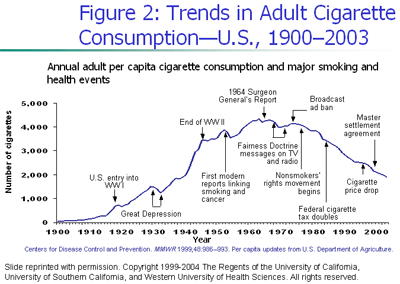
Changes in cigarette smoking across the 20th century show an increase from the early part of the century, peaking in 1963 (the year before the 1964 Surgeon General's report describing the negative health effects of smoking), and then falling by 2001 to levels last seen in the 1940s (Fig.2). In 1900, annual per capita cigarette consumption by adults was 54 cigarettes, which increased to 4,345 cigarettes by 1963, and then fell, by 2001, to 2,037 cigarettes per person annually. Smoking has decreased by both men and women since the mid-1950s, but much more dramatically for men, who cut their rate in half (from about 55% in 1955 to 26% in 2000), than for women, whose rate fell in the single digits (from about 25% in 1955 to 21% in 2000). The changes in these rates have now plateaued.
|
Whereas adult smoking has decreased in the last four decades, teen smoking, while first decreasing after the mid-seventies, has risen dramatically since 1990. In a 1999, Centers for Disease Control and Prevention report, researchers estimated that more than 3,000 children and adolescents were becoming regular tobacco users daily.
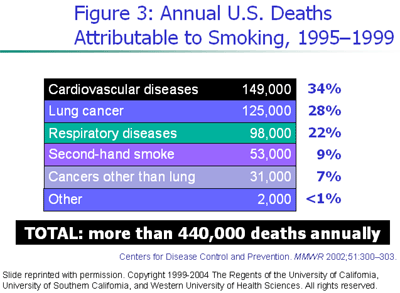
Any death can be devastating, but death due to a preventable cause is all the more regrettable. The number one preventable cause of premature death in the United States is cigarette smoking, which claims 442,398 lives annually (Figure 3).
|
In Texas, tobacco also tops the list of causes of preventable deaths. In 1999, experts estimated that annual deaths attributable to smoking in Texas numbered 24,158 (Figure 4).

|
From data gathered between 1999 and 2000, investigators reported they expected almost a half million teen smokers to die eventually from smoking-related causes. All deaths annually attributable to alcohol, illicit drug use, human immunodeficiency disease, homicides, suicides, and car accidents combined do not equal the number caused annually by cigarette smoking. Smoking also exacts a toll by causing chronic diseases. The rate for chronic obstructive pulmonary disease (COPD) in Texas (69.9/100,000) is dramatically higher than the (59.7/100,000) rate for all states combined.
Texas has a lot at stake. Texas' lung cancer death rate (87.1/100,000 population) is slightly under that of the United States overall (90.2/100,000). There is a lot to gain by preventing and reducing tobacco use. According to the CDC's Tobacco Control State Highlights 2002, approximately 15% ($1,265,000,000 or $543.87 per recipient) of all Medicaid expenditures were spent on smoking-related illnesses and diseases in 1998. (The above information is from CDC's Texas State Highlights 2002, which is available at the CDC website).
Smoking causes health problems large and small. It is responsible for such overriding health problems as cardiovascular disease as well as delayed healing after surgery and loss of time at work due to the health problems. A listing of the consequences of smoking includes:
Cardiovascular disease, the nation's number one cause of death, includes coronary artery disease, myocardial infarction, stroke, sudden death, peripheral vascular disease, and abdominal aortic aneurysm. Annually, approximately 149,000 Americans die due to cardiovascular disease attributable to smoking.
But smoking's harmful effects extend beyond the health of the smoker, affecting vulnerable populations, including the unborn and children. Although 73%–81% of women are able to quit smoking while they are pregnant, the remainder smoke throughout pregnancy. These women find themselves at higher risk of miscarriage/spontaneous abortion, stillbirth, preterm delivery, and having babies of low birth weight. In fact, experts attribute maternal smoking to the low birth weight of up to 61,000 infants and up to 26,000 admissions to neonatal intensive care units annually (MMWR 1997;46:1048-1050). Their babies are also at higher risk of sudden infant death syndrome. Researchers also link second-hand smoke from smokers in the home to illnesses in infants and children, including respiratory infection (pneumonia, bronchitis), asthma's development or its exacerbation, and ear infections (Anderson & Cook, 1997; National Cancer Institute, 1999; Poswillo & Alberman, 1992). An estimated 53,000 Americans die annually because of exposure to second-hand smoke (Glantz & Parmley, 1995).
Considering the risks of smoking and the tenacity with which smokers cling to the habit, it is little surprise that addiction to tobacco—and nicotine—is predicated on pharmacologic and behavioral processes similar to those of addiction to heroin and cocaine. To understand nicotine addiction, we will examine nicotine's pharmacokinetics (the effects of the body on the drug) and its pharmacodynamics (the effects the drug has on the body).
Within 11 seconds of inhalation of cigarette smoke, nicotine reaches the brain (Figure 5). Achieving higher and quicker nicotine blood concentrations than chewing tobacco, oral snuff, or nicotine gum, cigarettes are an ideal delivery system for nicotine. Nicotine is a weak base and thus is poorly absorbed in acidic media but well absorbed in alkaline media. Under physiologic conditions, where pH equals 7.3–7.5, about 31% of nicotine is readily absorbed across cell membranes. In tobacco smoke, nicotine is carried in water droplets also containing tar and alkaloids.

|
In the mouth where the pH equals 7.0, nicotine absorption is limited across the buccal mucosa of cigarette smokers (cigarette smoke is acidic); however, tobacco in pipes and tobacco in cigars, because it is cured differently, produces smoke that is alkaline and therefore better absorbed across the buccal mucosa. Manufacturers of snuff, chewing tobacco, and nicotine gum buffer their products to an alkaline pH so that the nicotine is more readily absorbed in the mouth. In the lung, nicotine is readily and rapidly absorbed across the respiratory epithelium, where a pH of 7.4, the extensive alveolar surface, and the extensive capillary system promote absorption.
The pharmacokinetics of nicotine has important implications for the proper use of tobacco cessation aids. Users of nicotine gum, lozenges, and the oral inhaler need to understand that because acidic beverages (cola, juice, coffee, and wine) transiently lower the pH of the mouth, absorption of nicotine from these formulations can be substantially reduced. These beverages should be avoided 15 minutes before and while using these products. Furthermore, because nicotine is readily absorbed through the skin, transdermal patches containing nicotine can be employed.
The liver is the primary site of nicotine metabolization. Nicotine is metabolized primarily (70–80%) to cotinine, with 10% converted to other metabolites. All are subsequently excreted by the kidneys. The remainder (10–20%) is eliminated unchanged in the urine. While nicotine has a half-life of 2 hours, cotinine has a much longer one (up to 17 hours). Therefore, researchers can measure cotinine concentration (saliva, urine, blood) to assess for current tobacco use. In fact, the daily cigarette intake can be extrapolated from the cotinine level.
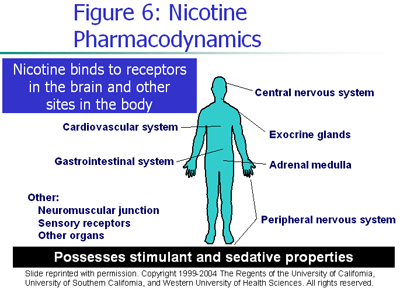
The attraction of tobacco use lies in nicotine's pharmacodynamics. Nicotine is a potent chemical agent that induces feelings of euphoria, pleasure, and arousal; improves repetitive task performance; and relieves stress and anxiety. It also causes skeletal muscle relaxation. Nicotine's stimulatory effects result in increases in heart rate (10–20 beats/minute), blood pressure (5–10 mg/Hg), and cardiac output. Nicotine suppresses the appetite and modestly and acutely increases the metabolic rate; therefore, most people who quit gain weight (usually less than 10 pounds). Overall, nicotine affects numerous systems, including the cardiovascular, neurologic, endocrine, and musculoskeletal systems (Figure 6).
|
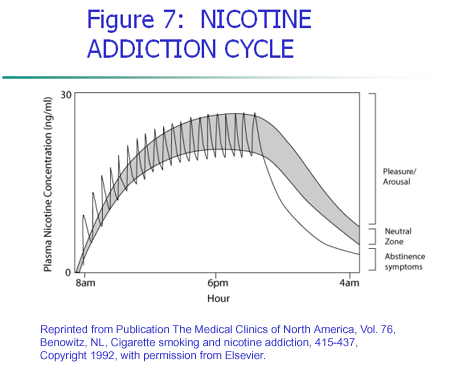
To most smokers, the first cigarette is the most important one of the day. The first one produces greater effects than any other, but tolerance begins to develop immediately with subsequent cigarettes. Progressively, throughout the day, nicotine's systemic threshold for pleasure and arousal and that for withdrawal symptoms rises, creating a recurring demand for cigarettes. By day's end, smoking is more often for relieving symptoms of withdrawal than for providing pleasure and arousal. Overnight, smokers become resensitized to the drug, tolerance diminishes, and the cycle begins anew on the next day (Figure 7).
|
The low produced by nicotine—the withdrawal symptoms produced when the drug is discontinued—is as dramatic as its high. Abrupt discontinuation results in a long list of negative symptoms:
|
Smokers who quit find that withdrawal symptoms generally peak 24 to 48 hours after cessation, gradually diminishing over the next two to four weeks. Nonetheless, compelling cravings for tobacco may persist for years after cessation. That is why during cessation, counselors advise quitters frequently about triggers for smoking and coping strategies to handle them.
To prevent withdrawal or to increase stimulation and stress-relieving effects, smokers often titrate their nicotine intake using simple methods. How do they do it?
Using these methods, smokers can increase their dosage, and controlling their dosage in these ways pays big benefits: it allows them to prevent withdrawal symptoms, maintain relief from stress, sustain arousal, and thereby modulate their moods. In short: a bigger bang for the buck.
Research shows that use of nicotine alters brain neurotransmitter activity, stimulating dopamine release, for example, which induces feelings of pleasure and creates cravings for repeated drug (that is, nicotine) administration. When smokers respond to this craving by increasing nicotine intake, a parallel increase (upregulation) in nicotine receptors occurs in the brain, causing observable physiologic changes. Then tolerance develops and greater doses become necessary to be able to avoid withdrawal symptoms and maintain the stimulatory effects.
The overwhelming transformation forged by nicotine addiction in the body's major systems makes cessation mentally as well as physically demanding. It takes a compelling compulsion to quit. Perhaps it takes a grandson telling a grandmother on his birthday that he has but one wish: that she will quit smoking. Perhaps it takes a hospitalization for pneumonia to force a patient to give up smoking. Perhaps it takes a word from a friend, especially a friend with expert authority—a physician or pharmacist—to be convinced of the benefits of quitting before an attempt will be made.
While it may be true that lung damage increases the longer a person smokes, it is also true that the benefits of quitting increase the longer a smoker abstains from smoking. Described in Table 4 are the benefits that accrue over time after quitting. The table not only clearly indicates the significant benefits of quitting but also reveals the scope of health problems caused by smoking. It is never too late to quit—health benefits of cessation can be incurred at any age.
|
||||||||||||||||||
Now that we know who is smoking and why, how do we prevent it? In the upcoming modules, the focus will be on cessation—how to promote it, what aids to use, how to help patients cope, and ways physicians and pharmacists can create synergy in their efforts to help patients quit. One need not be an expert in smoking cessation or behavior modification theory to successfully help patients quit smoking. Research abounds, and many useful guides exist to help the health care professional and the patient. Consider these modules your handbook to cessation promotion.
American Lung Association. What Are the Benefits of Quitting Smoking? Retrieved April 29, 2003, from the World Wide Web at www.lungusa.org/tobacco/quit_ben.html.
Anderson HR, Cook DK. Passive smoking and sudden infant death syndrome: Review of the epidemiological evidence. Thorax 1997;52:1003–1009.
Benowitz NL, Porchet H, Sheiner L, Jacob P. Nicotine absorption and cardiovascular effects with smokeless tobacco use: Comparison with cigarettes and nicotine gum. Clin Pharmacol Ther 1988;44:23–28.
Benowitz NL. Cigarette smoking and nicotine addiction. Med Clin N Am 1992;76:415– 37.
Benowitz NL. Nicotine addiction. Prim Care 1999;26:611–31.
Benowitz NL, Kuyt F, Jacob P 3rd, Jones RT, Osman AL. Cotinine disposition and effects. Clin Parmacol Ther 1983;34:604–11.
Campaign for Tobacco-free Kids. Higher cigarette taxes: Reduce smoking, save lives, save money. Available on the World Wide Web at http//:www.tobaccofreekids.org. Retrieved April 10, 2003.
Centers for Disease Control and Prevention. Tobacco Control State Highlights 2002: Impact and Opportunity. Atlanta, GA: Department of Health and Human Services, Centers for Disease Control and Prevention, National Center for Chronic Disease Prevention and Health Promotion, Office on Smoking and Health, 2002. Also available through the World Wide Web at http://www.cdc.gov/tobacco/statehi/html_2002/texas.htm.
Centers for Disease Control and Prevention. Cigarette smoking among adults—United States, 2001. MMWR 2003;52:953-956.
Centers for Disease Control and Prevention. Prevalence of current cigarette smoking among adults and changes in prevalence of current and some day smoking— United States, 1996–2001. MMWR 2003;52:303-307.
Centers for Disease Control and Prevention. Annual smoking-attributable mortality, years of potential life lost, and economic costs—United States, 1995–1999. MMWR 2002;51:300-3.
Centers for Disease Control and Prevention. Cigarette smoking among adults—United States, 2000. MMWR 2002;51:642–645.
Centers for Disease Control and Prevention. Smoking cessation during previous year among adults—United States, 1990 and 1991. MMWR 1993;42:504–7.
Centers for Disease Control and Prevention. State-specific prevalence of current cigarette smoking among adults and policies and attitudes about second-hand smoke— United States, 2000. MMWR 2001;50:1101–1106.
Centers for Disease Control and Prevention. Tobacco use among middle and high school students—United States,1999. MMWR 2000;49:49–53.
Centers for Disease Control and Prevention. Incidence of Initiation of Cigarette Smoking United States 1965-1996. MMWR 1998; 47:837-840.
Centers for Disease Control and Prevention. Medical-care expenditures attributable to cigarette smoking during pregnancy—United States, 1995. MMWR 1997;46:1048–1050.
Gilpin E, Choi WS, Berry C, Pierce JP. How many adolescents start smoking each day in the United States? J Adolesc Health 1999;25:248-255.
Glantz, S.A. & W.W. Parmley. 1995. "Passive Smoking and Heart Disease: Mechanisms and Risk". Journal of the American Medical Association 273(13): 1047-1053.
Fiore MC, Bailey WC, Cohen SJ, et al. Treating Tobacco Use and Dependence. Clinical Practice Guideline. Rockville, MD: U.S. Department of Health and Human Services, Public Health Service, 2000.
Goldstein MG, Niaura R, Willey-Lessne C, et al. Physicians counseling smokers. A population-based survey of patients' perceptions of health care provider-delivered smoking cessation interventions. Arch Intern Med 1997;157:1313–9.
Hughes JR, Gust SW, Skoog K, Keenan RM, Fenwick JW. Symptoms of tobacco withdrwal. Arch Gen Psychiatry 1991;48:52–9.
Moxham J. Nicotine addition [editorial]. BMJ 2000;320:391–2.
National Cancer Institute. Health Effects of Exposure to Environmental Tobacco Smoke: The Report of the California Environmental Protection Agency. Smoking and Tobacco Control Monograph No. 10. Bethesda, MD: U.S. Department of Health and Human Services, National Institutes of Health, National Cancer Institute, 1999, pp. 185–264.
Perry DC, Davila-Garcia MI, Stockmeier CA, Kellar KJ. Increase nicotinic receptors in brains from smokers: membrane binding and autoradiography studies. J Pharmacol Exp Ther 1999;289:1545–52.
Poswillo D, Alberman E. Effects of Smoking on the Fetus, Neonate, and Child. New York: Oxford University Press, 1992.
Richmond RL, Makinson RJ, Kehoe LA, Giugni AA, Webster IW. One-year evaluation of three smoking cessation interventions administered by general practitioners. Addict Behav 1993;18:187–99.
Schneider NG, Olmstead RE, Franzon MA, Lunell E. The Nicotine Inhaler: Clinical Pharmacokinetics and Comparison with Other Nicotine Treatments. Clinical Pharmacokinetics 2001;40(9):661–684. Adis International, Inc.
Smokeless States National Program Office. The Smokeless States National Tobacco Policy Initiative: State Progress Report 2002. Chicago: American Medical Association, 2002.
Texas Department of Health, Bureau of Chronic Disease and Tobacco Prevention. 1998 Texas Youth Tobacco Survey. Report 1: Current Tobacco Use. Austin: Texas Department of Health, n.d. Also available on the Web at http://www.tdh.state.tx.us/otpc/stats/statistics.htm.
Texas Department of Health, Bureau of Chronic Disease and Tobacco Prevention. Texas Youth Tobacco Survey. Prevalence of Tobacco Use Among Public Middle and High School Students Grades 6–12: 1999–2001. Austin: Texas Department of Health, 2002. Also available on the web at http://www.tdh.state.tx.us/otpc/stats/Prevalence9901.pdf
U.S. Department of Agriculture, Economic Research Service. Tobacco Situation and Outlook Report. Available at http://www.ers.usda.gov/briefing/tobacco/Data/table6.pdf. Accessed May 22, 2002.
U.S. Department of Health and Human Services. The Health Benefits of Smoking Cessation: A Report of the Surgeon General. Washington, D.C.: U.S. Department of Health and Human Services, Public Health Service, Centers for Disease Control and Prevention and Health Promotion, Office on Smoking and Health, 1990.